Carpenter ant structural remediation addresses structural integrity risks caused by Camponotus species excavating nesting galleries inside softened framing timbers. Unlike subterranean termites that consume cellulose,…
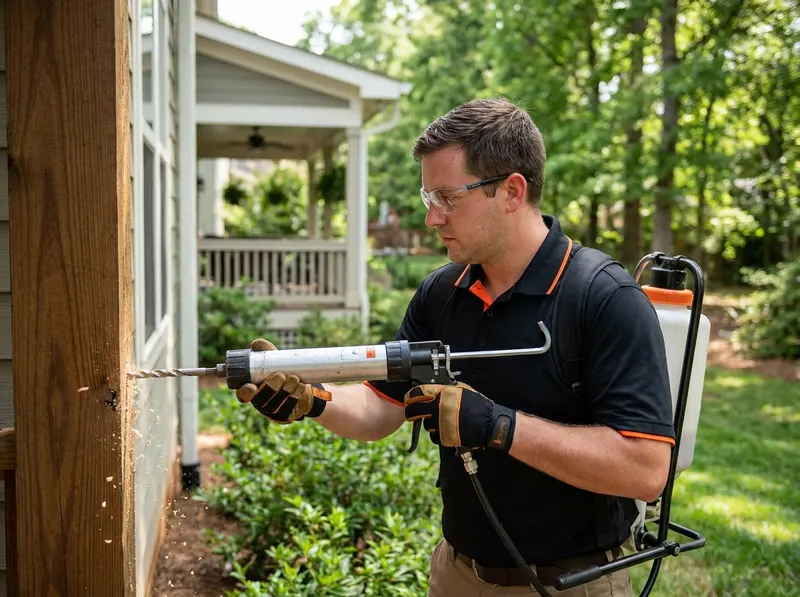
Carpenter ant structural remediation addresses structural integrity risks caused by Camponotus species excavating nesting galleries inside softened framing timbers. Unlike subterranean termites that consume cellulose, carpenter ants chew smooth galleries parallel to the grain, pushing out distinct coarse wood shavings known as frass. Homes situated near heavy hardwood canopies in North Main, Augusta Road, and Alta Vista frequently experience wood-boring incursions when decaying limbs overhang roof valleys. The primary structural danger emerges when parent nests located in moist outdoor stumps establish multiple satellite nests inside wall framing, rim joists, and window headers. Applying over-the-counter pyrethroid sprays merely repels foraging workers, fracturing the colony and forcing satellite queens deeper into concealed interior cavities. Structural defense mandates systematic isolation of the moisture fault alongside pressurized micro-injection of non-repellent termiticides directly into active nesting voids.
Eradication protocols follow a strict five-tier operational sequence to protect structural lumber. Property managers in Parkins Mill, Gower Estates, and Overbrook utilize targeted remediation to protect both historic framing and modern renovations without invasive structural teardowns. Step 1 requires acoustic tracing and infrared thermal detection to map hidden moisture pockets and hollowed cavities within subflooring and sill plates. Step 2 isolates exterior flight avenues, cataloging tree canopies touching fascia boards and damp mulch beds adjacent to crawlspace vents near the Reedy River corridor. Step 3 involves precision void drilling using 1/8-inch access points into affected wall framing, injecting targeted non-repellent active ingredients such as fipronil that circulate throughout the entire colony via grooming behaviors. Step 4 applies moisture exclusion practices, eliminating condensation points around window lintels and plumbing lines. Step 5 installs an exterior defensive barrier around the stone or masonry foundation to halt migrating foragers from secondary outdoor staging areas.
Targeted structural remediation is necessary when property owners observe coarse sawdust piles beneath baseboards, winged swarmers emerging indoors during spring, or rustling sounds within drywall cavities. In contrast, standard quarterly maintenance spraying only addresses superficial nuisance invaders along baseboards and leaves internal gallery networks intact. Homeowners in Botany Woods, Nicholtown, and Cleveland Forest face high local ambient humidity that accelerates roof leak decay, providing an ideal substrate for wood infestation. Regulating indoor relative humidity below 50 percent through proper crawlspace encapsulation and dehumidification suppresses fungal decay, denying carpenter ants the softened wood required for excavation. Remediation ensures that load-bearing studs, rafter tails, and subfloor assemblies remain structurally sound without ongoing reliance on binding monthly subscription contracts.
Every job gets a firm, written price after an on-site visit.
Tell us about your carpenter ant structural remediation job in Greenville and we'll send a clear, written quote, usually the same day.
 SilverOak Bug Elimination