Subterranean termite infestations in Greenville County stem primarily from the eastern subterranean termite, an insect that nests in moist soil and builds shelter tubes over foundation footings to access cellulose…
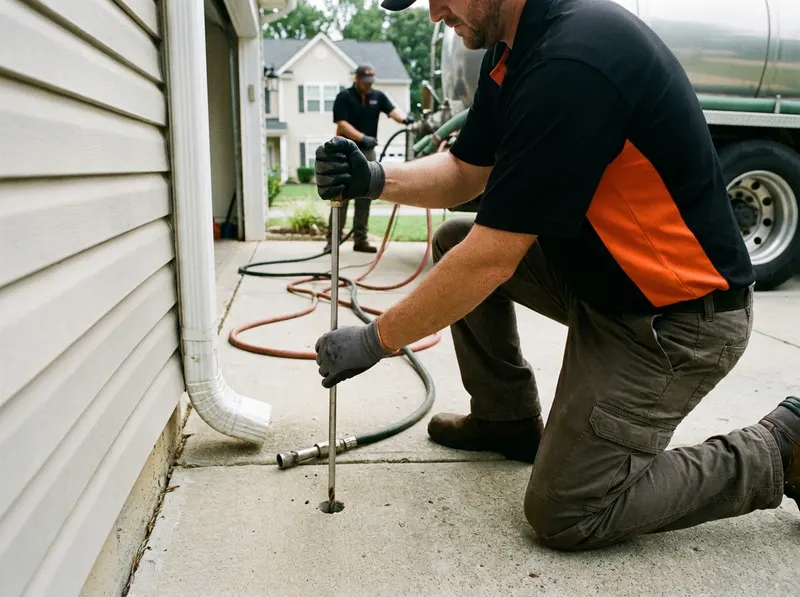
Subterranean termite infestations in Greenville County stem primarily from the eastern subterranean termite, an insect that nests in moist soil and builds shelter tubes over foundation footings to access cellulose framing. In neighborhoods like North Main and Overbrook, older crawlspace foundations with vented brick piers expose structural joists to damp air and soil contact, creating direct pathways for colony activity. Standard surface sprays do not stop these colonies; lasting defense requires non-repellent liquid barriers such as fipronil, which workers track back to the central nest, transferring the toxicant throughout the colony structure according to Clemson University Department of Pesticide Regulation protocols. Slab homes across Gower Estates and Botany Woods often face perimeter entry through expansion joints and plumbing penetrations, requiring targeted sub-slab injection to create a continuous barrier underneath concrete pads.
Choosing continuous liquid perimeter barriers over localized baiting stations depends on infestation severity and foundation architecture. Monitored bait stations, regulated under EPA Integrated Pest Management guidance, install every 10 to 15 feet around the drip line, providing ongoing perimeter monitoring without disrupting landscaping, though full colony collapse can take several months. A continuous liquid soil treatment delivers immediate defense by saturating the soil along structural footings, creating an uninterrupted chemical barrier that halts termite travel within days. While liquid trenching requires drilling through adjoining patios or porches, it provides reliable perimeter defense for heavily wooded parcels near Paris Mountain State Park and Cleveland Forest where subterranean pressure remains elevated year-round.
Executing subterranean termite eradication follows a verifiable technical procedure:
Homeowners along Augusta Road, Alta Vista, and Parkins Mill facing subterranean colonies need targeted perimeter defense rather than repetitive monthly chemical spraying. Subterranean termite management does not require indefinite monthly spray contracts; a correctly engineered liquid termiticide barrier bonds to the soil substrate and remains active for up to five to ten years when undisturbed by landscaping modifications.
Every job gets a firm, written price after an on-site visit.
Tell us about your subterranean termite eradication job in Greenville and we'll send a clear, written quote, usually the same day.
 SilverOak Bug Elimination